Showing posts with label writing advice. Show all posts

Wednesday, March 13, 2013

Show v. Tell: 4 Tips from Author Jordyn Redwood


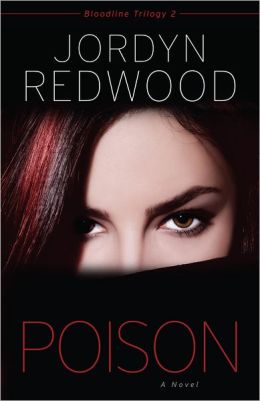
Today I'm delighted to have Jordyn Redwood join me with a guest post on how to write show v. tell. As you'll see below, this is something I believe she did with excellence in her new novel Poison. It's also why I asked her if she'd like to write a post to share. Without further ado, here's Jordyn:

Because the great Cara Putman asked me to do this—am I doing this—but let me first say I am hardly an expert on show versus tell—every writing teacher’s admonition for every storyteller out there. In fact, I was quite shocked when Cara said she was taking notes on some passages in Poison because she thought they were good examples of showing. I am still hoping she will tell me exactly which ones so I can admirer my own amazing work because I was that surprised.

Showing versus telling can definitely be learned (after all, I did it and was never an English major) so don’t go over the writer’s cliff Thelma and Louise style if some of these points don’t hit home. I am still learning some of the more advanced points myself and that’s a mark of a true writer—always desiring to learn more.

The concept of showing could also be described as Deep POV. I think these concepts are honestly interchangeable. So if you hear one—think of the other.

Friday, February 22, 2013

Picking Topics for Books

One challenge for a novelist is coming up with ideas that generate ideas for future books. While we're writing one, we need to generate ideas for more -- it's a cycle of life of sorts. 

I read a few non-fiction books, looking for anything that jumps out at me. And if it interests me, there is a chance I can spin a story around it. After that I noodle the story, try to come up with new ideas, characters, and details that will coat the non-fiction idea in a way that fiction lovers with enjoy and be immersed in them. 

When Sarah, Tricia and I began talking about creating a novella collection, we stared with a conference call. We started talking about the elements that we share in our World War II novels. Once we started spinning out elements, it became easy to craft a core that we could work from to create stories that were woven together.

With A Wedding Transpires on Mackinac Island, I thought about places we enjoyed visiting. Those often make a great setting for a book that will allow readers to escape into the pages and stories for awhile. 

What makes a book appealing to you?

Wednesday, September 26, 2012

To brand or not to brand…

A brand.

That’s what every author needs.

At least that’s what we’re told as authors almost from the moment we first tap out a word on a keyboard. From some perspectives, people take it to mean you need a tagline. A pithy phrase that defines you to readers and publishers. Others say it means identifying those elements that are consistent in every book you write. The general experience a reader can expect anytime they pick up one of your books.

Friday, September 21, 2012

Writing, Dreaming, or Scheming

Here's another post. Life is still the same. Only now I'm balancing writing a WWII novel with a contemporary mystery. Oh and spent a lot of time the last couple weeks trying to beat another WWII proposal into submission. Amazing how the more I write, the more the process stays the same.

One of the challenges of the writing life is how to balance the need to write contracted books with the need to constantly cultivate new ideas.

For example, right now (April 2011) I'm writing the contemporary romantic suspense set on Mackinac Island. I'm also thinking about the romance and mystery novella I'm writing in the Cherry Blossom Capers. Then last week I fleshed out a possible three book world War II series. It involves three sisters who do very different things during the war and all end up in London for a piece of it.

See? Very different. It's like juggling several plates...er...plots at the same time.

Just when it gets overwhelming, I get fabulous feedback like this from a reader who lived a story I wrote. That keeps me going!  I can't wait to get this package from my editor!

So anyone want to guess which memorial/monument is in the background on this gorgeous cover?

Wednesday, June 20, 2012

Looking for a Writer's Conference? Come to ACFW


In a couple weeks I'll start one of my favorite times of the year, running first time orientation for the ACFW conference. A few years ago we realized that approximately a third of our attendees any given year were first timers. I'll never forget my first time at conference in 2005.

I went with a fellow writer from Indiana -- a gal I'd met once or twice -- yet, we became fast friends in the six hour drive to Nashville. I met Tracie Peterson for the first time looking like a drowned cat -- boy, would I like a photo of that first impression! That first conference launched my writing career...introducing me to editors, agents and other writers. Finding out that I wasn't crazy for thinking a bit differently from others.

Wednesday, May 30, 2012

Three Tips for Creating Compelling Characters


I don’t know about you, but characters often make or break a story for me.  As a writer, I try to remember what makes some characters and their stories more compelling for me than others.  Here are a few tips I try to keep in mind as I write based on the characters that I love to read about again and again.

1)   Give your characters a few quirks.

Quirks are those things that we all have – whether we acknowledge them – that make us unique. It might be a penchant for constantly getting into trouble ala Anne of Green Gables, the girl who made lots of mistakes but tried to only make the same ones once. Or it might be a foilable like fighting the need to control EVERYTHING in our lives. 

2)   Put those characters into a situation that will force them to do the one thing they promised to never do.

In A Wedding Transpires on Mackinac Island, the heroine Alanna Stone has promised never to return

Wednesday, May 23, 2012

Three Tips when writing about something you've never done


Last spring when my writing bud Nicole O’Dell asked me if I wanted to be part of a novella collection with her, my initial reaction was “of course!” Nicole is so prolific and accomplished I couldn’t imagine not writing with her. And if it also meant I could help a Valerie Comer, a debut author, get her first contract, then my enthusiasm for the project only went up.

Then they told me the topic for Rainbow's End.

Geo-caching? It sounds fun, but I’ve never tried it. Never been to the Ozarks either.

Still, I wanted to be part, so I put on my research hat. Here are some tips to help you when you find yourself in a similar position.

Monday, May 21, 2012

Getting Our Facts Right...

I'm bringing this one back. Getting research right is so important. Our readers care. My friend Julie Lessman recently had a great post on this at the ACFW blog. So

Recently, I received some really amazing feedback for one of my historicals A Promise Forged. First, you need to know a little about the story, set in 1943:

When Kat Miller makes All-American Girls Professional Softball League, she struggles with long road trips, grueling practices, and the challenge of making time for God. Not only that, but older teammates are jealous of her success and an irritating reporter, Jack Raymond, has a knack for getting under Kat’s skin.

I received a package from my editor a few weeks ago. When I opened up this package, I was instantly intrigued by its contents, especially the black and white baseball card autographed to me and the autobiography with a photo of a female softball player on the cover. The card is about to get put in a shadowbox frame -- it's an amazing gift.


It also came with a letter: "...A friend gave me the book because she knew I had played in the All-American Girls' Professional Baseball League in 1954 for the Grand Rapids Chicks. As I read the book, it was like I was walking in Kat's shoes, reliving my life again.I am enclosing a book I wrote about my ball playing days, and a signed baseball card....Thank you for the great story!"

This type of feedback is a dream come true for a writer. It lets me know all my research paid off and I got the details right. How often have you read a book that's moving along and then the author gets one fact wrong. While you were going with the characters before, now you can't. The error (no matter how small) is a glaring problem. It makes you doubt everything else. 

So for a historical, I spend time in archives and talking to historians and people who lived it. For a suspense I talk to arson investigators, police detectives, etc. But as a writer, I have to get the details right. 

And when we do? Serendipity!

Friday, May 18, 2012

Interview with author Olivia Newport

Today I'm delighted to have fellow author Olivia Newport join us. her first novel, The Pursuit of Lucy Banning released May 1st. I always love to talk to new authors and see what their process is like. I hope you enjoy getting to know Olivia and her book as much as I have.

Olivia, can you tell us a bit about how The Pursuit of Lucy Banning got started?
  

I have suburban Chicago roots, but I had not heard of the Prairie Avenue Historical District until a friend of mine became a docent at the Glessner House Museum on Prairie Avenue. This house preserves the flavor of Chicago’s gilded age when the neighborhood was full of wealthy powerhouses of industry. As soon as my friend began his training, he saw the potential for the setting of a story. He is not a fiction writer, but he knew my interests. It did not take us long to cook up story ideas about a daughter of a privileged family who engaged with the changing social climate of her time.

I love the idea of a character who interacts with the issues of her day. Your book is layered with historical detail -- I know how tough that can be to get right. Can you tell us about your research process?

Friday, March 02, 2012

3 Ways to Incorporate Setting into Your Story

If your a writer I'm sure you've had a moment like this...you have characters. You might even have a plot. But you're not sure where to place the story.

My mentor Colleen Coble has told me often that the setting should be so integral to the story that it is practically a character. To the point readers can't imagine the story taking place anywhere else.

Unlike some writers I often start with the setting, especially with my historicals. There will be some even in a specific location that triggers the what if that jump-starts my creativity. Here are a few ways I've learned to incorporate setting so that it grows organically into the plot:

1) If at all possible visit the location. The photo above is from Mackinac Island, the setting of my book that releases in April. A Wedding Transpires on Mackinac Island grew out of a visit my family made to this island at the tip of Michigan. There's something so quaint and captivating about this small island that doesn't allow cars or other vehicles that aren't propelled by something other than feet -- horse or human. Looking at photos is great, but it's not the same as actually being there and soaking in the atmosphere. Seeing the differences between the island in daylight and once the sun goes down.

2) Talk to those in the locale who will play a role in your book. When we visited Mackinac Island, I already had a general idea of the type of book I wanted to set there. While my family spent time at Fort Mackinac, I stopped at the police station and talked to the police chief. I had an idea of what would happen if a murder occurred, but he confirmed and redirected my ideas. When I was almost done writing the book, I realized that one of the characters was going to be shot. That led to a line of questions I hadn't anticipated when I was on the island, so I placed calls to the medical clinic on the island to see how a gunshot would be treated and handled. While I was 90% right, that isn't close enough.

3) Take lots of pictures and hang on to the guidebooks from the area. While writing Sandhill Dreams, I drove to Fort Robinson outside Crawford, Nebraska, to spend the day with the museum curator. It was wonderful to get his perspective and research on Fort Robinson's role during World War II, especially the dog training, but I almost forgot the most important stop...the museum bookstore. In there I found a couple of resources on the flora and fauna of Nebraska from Nebraskaland Magazine. Those resources (only $1 each) became go to books as I wrote all three of my Nebraska books and tried to incorporate variations in the locations of each. While in London at the Imperial War Museum, I found a book in the bookstore that sent my scurrying back to an exhibit that highlighted the children of World War II in London and England. That led to research that became the historical hook for A Promise Kept. Grab your camera and take lots of photos...you never know when you'll need them, but also be sure to grab the maps, phone books and fliers that will help you remember the critical details that inspired your creativity. While at the Biltmore in Ashville, North Carolina, I took photos of books in the shops, so that I could dig deeper when I got home to see if they'd actually have the information I needed.

What tips do you have for incorporating setting in your writing?

Monday, July 25, 2011

Who's Your Family?

Family.

We all have them. And they are all so different.

I have been blessed with an amazing family.


This is my dad with me and my siblings on his back...a long time ago LOL. My parents just left yesterday after coming out for almost a week to free me to work on edits for two August 1st deadlines. They sent me flowers ahead of time to thank me for letting them come!

Did I mention I'm blessed?

But not everybody is so fortunate. They didn't grow up with loving parents in a secure home. They didn't receive hugs freely as a kid to have them to give to their kids. They didn't hear that they were treasured by God from an early age.

Experiencing that marked me. It made me the woman I am today.

Not hearing or experiencing that is just as scarring. It makes people who they are.

So think about your characters...what's their family like? Are their parents married? Divorced? Were they an only child or surrounded by siblings? Did their family have money? Were things hand to mouth? Did they grow up in a family with parents who led them to God? Or did their parents give them a warped image of God? Those questions matter because the answers change how they will respond to the life and challenges you're giving them today.

So what about you? Was your family more functional...or dysfunctional?

Monday, July 18, 2011

The Moral Premise

Right now I'm reading a book called the Moral Premise. The author Stanley D. Williams will teach the Early Bird at ACFW in September, and like any good hyper student, I wanted to get a head start on preparing. The Moral Premise reveals the foundational concept at the heart of all storytelling and successful box office movies. In concrete terms it explains how you can create your own success and, in the process, entertain, delight, challenge, and uplift this generation and the ones to come.

Hmmm, that's a lot to offer in one little book!

Wednesday, July 13, 2011

Quirks: We All Need Them

We all have quirks.

One of mine is that I love traditions. So every July 4th week, I know I'll be dragging my kids to a blueberry farm at least once so we fill our fridge and hopefully our freezer with fresh blueberries. This year we went twice in three days -- so far. But my breakfast of choice is homemade oatmeal with blueberries on top. Every day. Of the year. Over and over. Quirk.

Monday, July 11, 2011

It's Almost Here: ACFW Conference

This week I've started one of my favorite times of the year, running first time orientation for the ACFW conference. A few years ago we realized that approximately a third of our attendees any given year were first timers. I'll never forget my first time at conference in 2005.

I went with a fellow writer from Indiana -- a gal I'd met once or twice -- yet, we became fast friends in the six hour drive to Nashville. I met Tracie Peterson for the first time looking like a drowned cat -- boy, would I like a photo of that first impression! Am I ever excited that she is the keynote speaker this year!

Monday, March 21, 2011

These are a few of my favorite things: Writing Books

This week, since so many people are on spring break, I'm going to share a few of my favorite books with you. I'm going to start with a craft book.

Plot v. Character is a new writing book, releasing in the fall of 2010. Jeff Gerke, the author, has developed software (which I love) that walks writers through the creation of stories through two means. Starting with 1) the plot or 2) the character. Most writers have a style that they prefer -- I tend to be strange (shocking I know!) and will start some stories with a plot idea and others with a character. I'd used the software when I'd get stuck in a book or to help flesh out a germ of an idea.

What I love about the book is that it takes the gems from the software and puts it in a very easy to read and apply format. The book has lots of practical applications and covers just about everything a novel writer needs. It's not genre specific, so really is a tool that any novelists can use with success.

First, the book deals with creating likable characters. It addresses everything from physical attributes to the major events and inciting incidents that character must deal with. Then it turns to marvelous plots. The author relies on the three act structure to form the bones of the plot.  I would still use the software to help me implement all he talks about, but the book alone is gold.

Another book that I love and recommend to most aspiring writers is James Scott Bell's Plot & Structure. (His Revision and Self-Editing is equally good.) Plot & Structure's strength is the very easy way that Jim explains how to formulate a novel. When I get stuck in a plot, I'll pull it out and read a few pages for inspiration. I always come away with practical tools I can immediately apply to the novel I'm writing. And this book is loaded with excellent exercises that you can apply immediately after reading. I highly recommend it!

Monday, August 16, 2010

Roots: the keys to our pasts and futures


Isn't this a cute group of kids? My dad's buried under the pile. I'm probably eight, since I'm guessing Joel is about one.

Eric pulled this photo out last week. You can learn a lot about me by this photo.

And I got to thinking about what that means for the characters I create. This week, I plan/hope to work on proposals for new books and series. Often the hardest part of the process for me is taking the time to drill down into the main characters' psyches. What makes them act, think and talk the way they do?

For example, most who know me correctly identify me as Type A within about three minutes. Look at this photo. Doesn't it make sense? I'm your stereotypical first born...just read Kevin Leman's Birth Order book if you're not sure what that entails. And this photo clearly shows that. Who has her arms wrapped around all three of her siblings? Yep...

But that's a simple characterizer. Identify the birth order of characters and it gives a core set of criteria for how they might act. But it's certainly not a guarantee.

I also tend to engage a full room -- doesn't matter how many people are in it. That's not necessarily a function of my birth order. For me, I think it had more to do with being an early homeschooler who felt the need to break the stereotype that homeschoolers are wallflowers. And I genuinely like people. But why might a character be an extrovert or introvert? What's the lie they believe about themselves?

All of these questions require thought and diving deep. Hard work. But critical to creating characters readers can emotionally connect with. And that after all is what we all want!

Friday, October 23, 2009

Turning an Idea into a Book, Part 2

After my editor asked to see the ideas I had for the Ohio series, I realized I needed to do some fast searching.

But I couldn't just look for any old World War Two story. I knew it had to be something I could become truly excited about.

To start I hustled over to Google and entered searches along the lines of World War Two and Ohio. Really high tech, right? I also hopped over to the historical societies in the largeer cities. And I prayed. It was amazing to watch God lead me to the right sites and the historical hooks. I’d hit the site and soon turn around with a squeal and tell my husband, “can you believe what I just found?!?!?”

I found a top-secret war project hidden in a company in Dayton. I love the idea of spies and secrets, so it was an immediate plot – and that book releases in November. The third idea gave me fits until I remembered that there was the All-American Girls Professional Softball/Baseball League during World War Two and beyond. While there weren’t any Ohio teams, dozens of Ohio girls played in the league. A perfect plot for the heroine I envisioned for the third book. And that story releases in the spring of 2010.

Once you’ve found the hook, you still have to research and eventually stop. Generally, I immerse myself in that particular event. I’ll buy and read books on the subject. Usually, I can find at least one.

If possible I do a site visit. Museums are a wonderful resource, and for me there’s always been something important about seeing the setting. That may not be possible for all my books, but I can find videos, guides, etc., that help me understand the flora and fauna, what the weather patterns are like, and the other details that help the setting come to life.

Then it’s time to step back and dream. Invariably, I’ll learn there are more details I need. But if I never start writing, I’ll never have a book. And that is the desired end result.

Good luck as you work on your books!

Wednesday, October 14, 2009

Turning an Idea into a Book, Part 1

One challenge both published and not-yet-published authors have is how to rein in an idea and turn it into a book. My friend Tricia Goyer posted on twitter last week about the reality that you have to reach a point with your research where you stop and start writing. But knowing when you’ve reached that point is so hard!

Research is often the key to that ah-ha moment. The moment where you realize you have an idea that generates passion and excitement in you as an author. The moment when characters begin to raise their hands and demand to tell their story.

The key is learning how to find that balance. When to keep researching and how to stop.

For my Ohio series for Heartsong Presents I had one idea. An idea that I uncovered in a London museum. The tidbit was enough to be the historical hook for one story, but certainly not enough for three. And three is a requirement So what did I do when my editor asked to see all three ideas?

Come back Friday, and I'll share some of my tips. Also, let me know what questions you have about writing. And I've got great news to share soon. I'm just waiting on the actual contract...You'll see it here first!

Monday, August 24, 2009

Calming First Time Nerves


Attending a conference is nerve-wrecking.

Let’s face it, you’re taking huge risks by going.

You've invested a lot of money: registration, hotel, airfare, some meals, and other incidentals. You’ve invested who you are – by attending you’re joining the ranks of those who have moved from wanting to write, to those who have taken steps to actively chase a dream. You’re risking your heart because you’ve gone public with your dream.

Bundle that with the fact that you might not know many people and you might be pitching the book of your heart to an editor and agent, and suddenly your stress is through the roof.

It’s okay.

Sit back, take a deep breath, whisper a prayer for peace and help.

You’ll be okay.

As someone who’s been in your shoes, and helps those first-timers attending ACFW each year, I’d like to offer a bit of advice.

1) Pray, pray, pray. If God has lead you to attend ACFW or another writer’s conference, then He has a purpose and a plan for your time there. It may not be what you intend. But pray and ask for His will to be done. Ask for opportunities to serve others – nothing better to take your thoughts off your fears than to focus on others. And ask Him for peace to carry you through the days.

2) Prepare, prepare, prepare. ACFW has a conference blog that is packed with fabulous advice on everything from how to get from the conference to the hotel, where to find food for Friday’s free night, and how to get ready for that editor appointment. Take advantage of that repository of advice. Get your one-sheet ready if you have time. Polish that first chapter, and have it in your bag for appointments. Have business cards to leave with those you meet. Get your toolbox loaded and ready.

3) Research, research, research. Take the time to know what the houses you are pitching are currently publishing. How does what you write line up with that? Is it a new niche? Different from current authors? Etc. Google the editors so you can learn what you can. Same with the agents. Some of the agents have blogs. Read them. It is a wealth of information not just about the industry and their firms, but also on personality. You can tell so much from how a person writes for a blog.

4) Relax, relax, relax. ACFW, at least, is one big family. You may not think you know anyone, but you’re wrong. You’ll spend the conference giving and receiving hugs from folks you’ve met on the loop or first timers loop. Reach out to others with a smile, and they’ll be delighted to reciprocate. At my first conference, the friend and I who had driven down together grabbed a gal who was flying solo for lunch. Before conference officially began, we’d connected in a very cool way.

5) Volunteer, volunteer, volunteer. By serving others you will find yourself relaxing, meeting others, and having a great time. There are so many ways to do it that don’t take much from you, but help the conference run efficiently and smoothly.

6) Rest, rest, rest. Sometimes you just have to skip a workshop because you’re brain is on overload. Or you can’t fathom the thought of another meal surrounded by people. That’s okay. Escape to your room. Put your feet up. Take a bath. Read a book. Do whatever it takes to recharge. We understand.

7) And at ACFW don’t forget the prayer room. It is open all the time, and the perfect place to escape when you’re rattled and overwhelmed.

Can’t wait to meet you in Denver!

Tuesday, October 21, 2008

Google Maps -- An Amazing Tool

I've heard many writers rave about Google Maps, but until A Promise Kept, the book I just finished, I didn't really need it. I knew my settings well from site visits or having lived in the communities.

Cincinnati -- yeah, don't know it well at all.

So I turned to Google maps. I LOVE the satellite feature. It allowed me to explore neighborhoods and figure out exactly where my characters lived. It also allowed me to see the library branch. I strolled through Eden Park. It was amazing! I still would have preferred to actually visit the site, but this provided a second best approach.

So here's your challenge for the day -- go to google maps and see if you're house shows up. Ours doesn't (yet!), and I'm okay with that.

LinkWithin

Related Posts Plugin for WordPress, Blogger...